“I’m tired of having to explain why it’s important to study Russian even in situations like these”—Russian invasion of Ukraine in 2022 changed the realities of Russian language students overnight
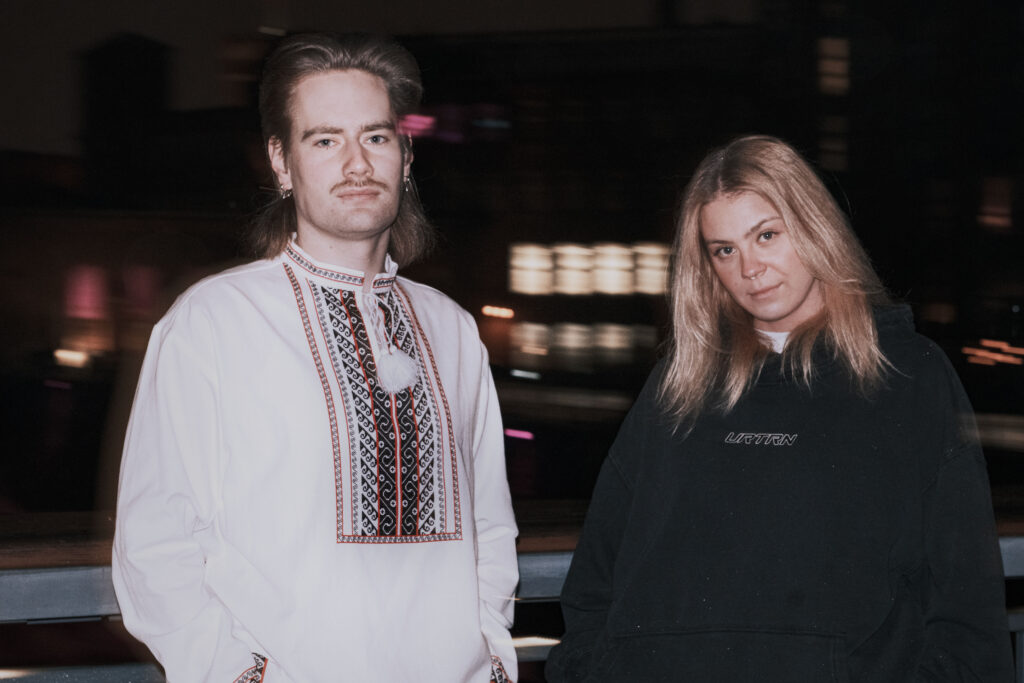
Russian invasion of Ukraine in 2022 changed the daily lives of Russian language students almost overnight. Henna Rantala had to return home in the middle of her exchange, and Erik Toikka, who has roots in Ukraine, faced internal conflicts regarding his identity. Even though the field has changed, they want to emphasize the importance of studying languages.
Original text: Pihla Nurmi
Pictures: Tatu Vornanen
Voit lukea tämän artikkelin myös suomeksi.
On the first of February 2022, Henna Rantala, a Russian language student at Tampere University, arrived in Saint Petersburg. The degree programme’s mandatory language residency had been long-awaited, as the pandemic had forced everyone to reschedule their exchange studies. Rantala was supposed to spend the spring term in Russia and deepen her understanding of the language and culture.
24 days after her arrival Russia launched its attack in Ukraine.
Things changed fast. There were anti-war protests held in Saint Petersburg, and participants were detained. Students were advised to stay away from the protests. A British exchange student travelling with Rantala accidentally strayed into the middle of a protest and was arrested.
Extensive sanctions were imposed on Russia, and rumours of the country being in a state of war started to spread.
“When people started talking about Russia being at war, we decided that it was time to leave.”
Tampere University urged the exchange students to return to Finland and froze all collaboration with Russian institutes. The Ministry for Foreign Affairs of Finland recommended all Finnish nationals to leave the country. In no time, Rantala was back in Tampere.
However, rather than being a relief, the return brought with it a feeling of emptiness.
“I was suddenly afraid that all the hard work towards my degree was for nothing.”
Rantala started her Russian studies in 2020. Interest in the language awoke already at age 14, when Russian was offered as an optional subject at school. The uniqueness and challenge of it intrigued her. The language studies continued in upper secondary school and later at university. While she did not necessarily have any career goals in mind, the desire to delve deeper into the language was always strong.
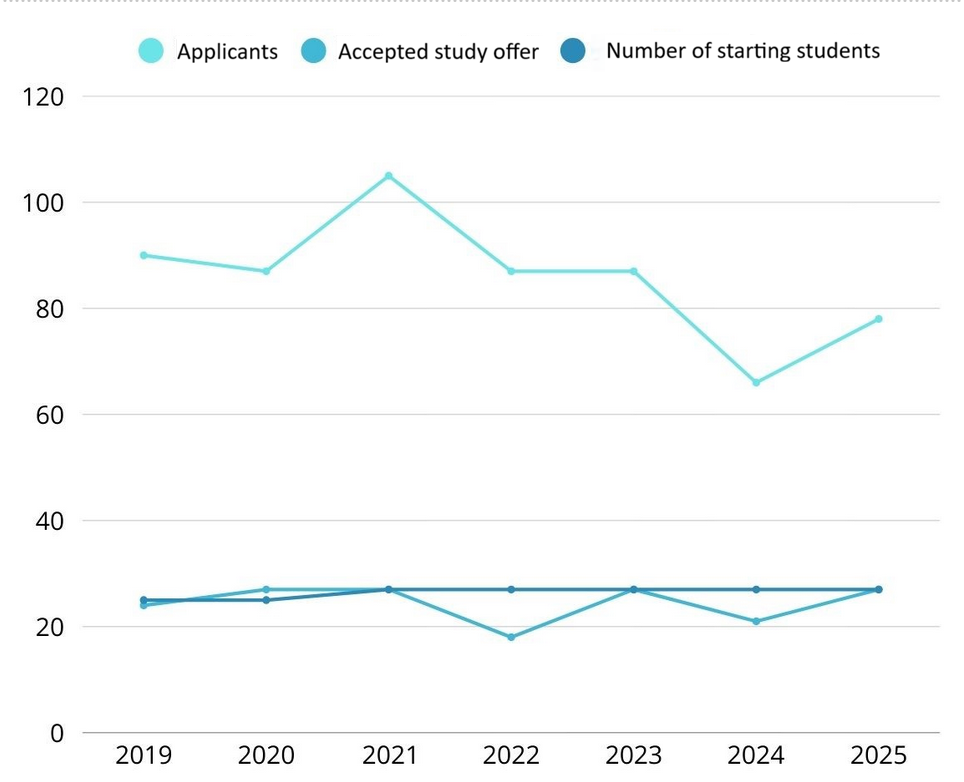
Drop in the number of applicants
Russia’s newest invasion of Ukraine is reflected in the number of applicants for the degree programme. In 2021, 105 students applied to the Russian language programme at Tampere University. After the beginning of the war in 2022, the number of applicants dropped to 87, and in 2024, only 66 students applied to study Russian language—almost 40 percent less than before the war. In 2025, a small rise in applicants brought the number to 78, but the amount was still significantly less than before.
Competition for available student places has also decreased. Before the war, there were nearly four applicants for every spot, but in 2024, that number had dropped to about 2.4. In 2022, only 18 of those accepted into the Russian language programme took up their places, even though the number of spots remained nearly unchanged.
Professor of Russian language and culture Sanna Turoma tells Visiiri that the impacts of the war were seen especially at the master-level of Russian studies. Some students either dropped out entirely or did not progress to master’s studies after finishing their bachelor’s. Fortunately, the situation is improving.
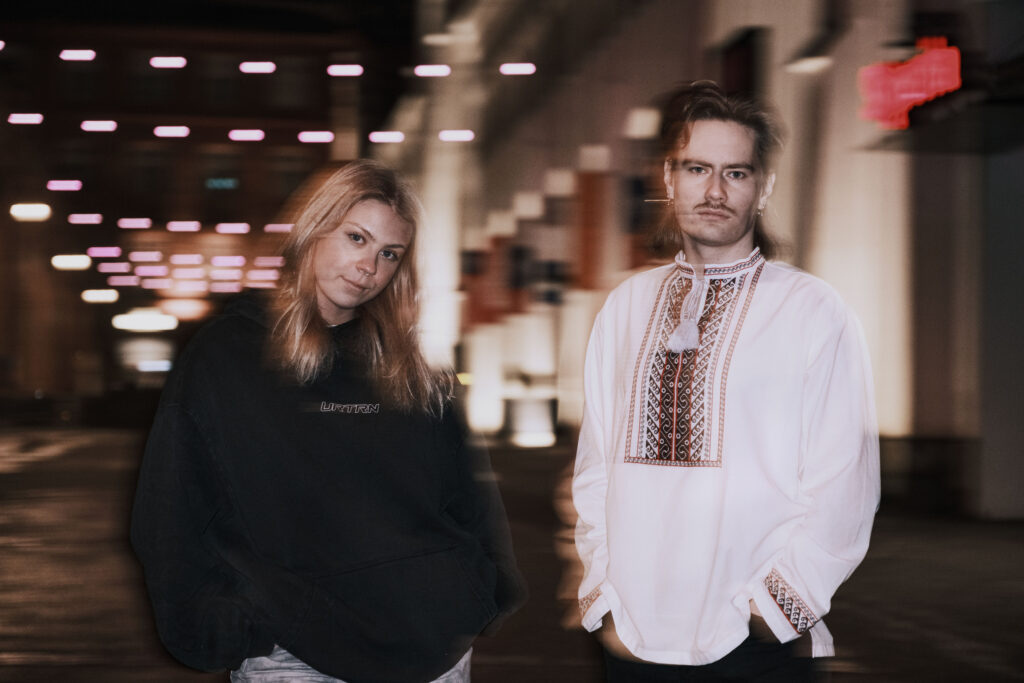
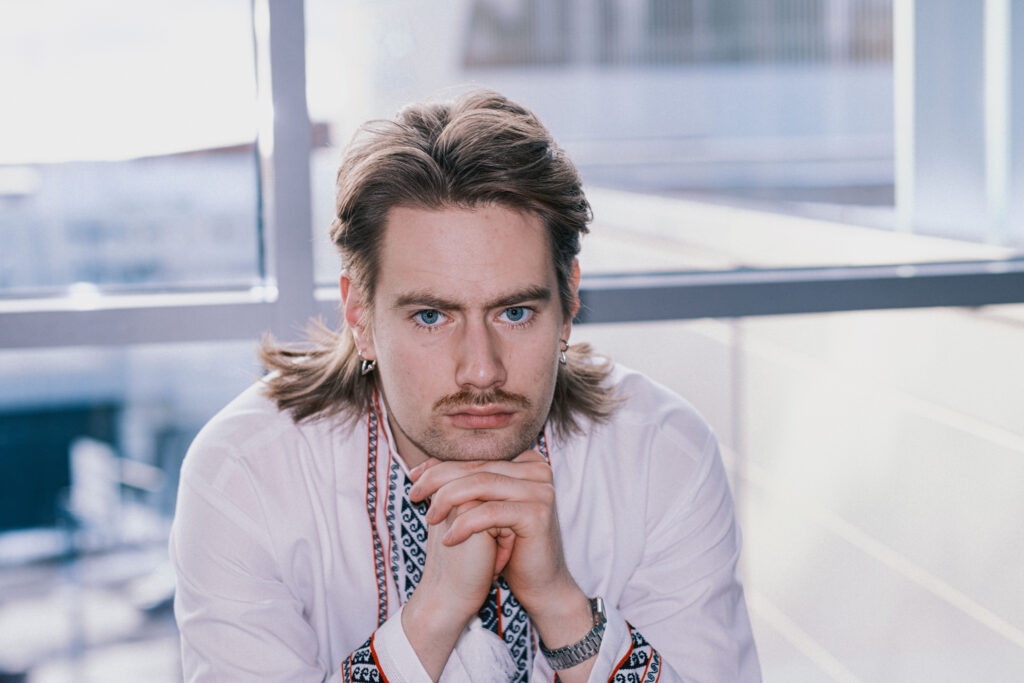
Erik Toikka, now studying for a master’s degree in Russian language, was only a first-year student when the invasion began. He ended up in Tampere University inspired by his sister but had postponed his studies due to military service.
Toikka’s ties to both Russia and Ukraine date back to his childhood. His mother comes from eastern Ukraine, specifically from the Donetsk Oblast. They spoke Russian at home and visited grandparents, who had moved to Saint Petersburg, regularly throughout his childhood.
“The start of the war was a shock to everyone.”
The war directly impacted the family. Some relatives stayed in Ukraine and concern for their safety was always present. Motivation to study got poorer, which reflected on his grades.
The conflict in Toikka’s identity that emerged with the war was nothing new to him. During the Russian annexation of Crimea in 2014, Toikka was harassed at school: people confused his Ukrainian background with being Russian. After all, he had a Russian passport, which made visiting his grandparents easier. Family ties to Russia were strong.
In sports, along with rooting for Russia, Belarusian and Ukrainian teams were likewise cheered on at home—the post-Soviet countries were regarded as part of the family rather than rivals.
The annexation of Crimea forced Toikka to rethink the matter.
“As early as age 13, I found myself having to figure out a way to draw emotional boundaries around my own roots”, he explains.
The full-scale invasion in 2022 brought the feelings back.
Changed attitudes
Both Rantala and Toikka recall the general attitude toward their field being overall positive before the war.
“Back then people felt that Finland had good relations to Russia”, Rantala says.
Within the university, this view has not remarkably changed, and the attitude of teachers and other staff has remained unchanged. The war is discussed openly and critically in media and history courses, and in language courses it is more of a theme always present in the background. Students were not the only ones affected by the war—it had an effect on the teaching staff as well.
“Every teacher and professor condemned the situation, despite many of them having family in Russia when the borders closed”, Toikka explains.
Toikka recalls a few professors saying that even though they are originally from Russia, they have always regarded Ukrainians as brothers.
Outside the university, however, the attitude has been quite different. Both Toikka and Rantala have faced inappropriate comments regarding their field of study. Rantala recalls a situation with a taxi-driver, who questioned the need to study the language and told her to “go back to Russia”. The overall opinion turns more and more sceptical as the war goes on.
“People seem to forget that if nobody in Finland spoke and understood Russian, we would have no way to know what happens behind the border”, she points out.
Toikka once overheard a conversation at the university sports centre where a few students stated that studying languages is completely useless. According to them, languages have no place in the university curriculum.
“That really stuck with me. I didn’t have the energy to partake in the conversation, but I wish people understood the value in studying languages.”
When people ask what they study in university, both of them tend to just say that they study foreign languages.
“I don’t want to have to constantly explain why it is so important to study Russian, especially during times like these”, Rantala says.
When the war started, the faculty organised a crisis meeting. According to Toikka, the overall mood there was very emotional. Students and teachers alike were invited to the event, and the university’s crisis counselling services were also present.
Professor Sanna Turoma, who led the crisis meeting, says that the outbreak of the war came as a shock to the entire community. Recalling events that took place four years ago still brings up strong emotions for her.
“The situation was extremely challenging and required crisis management. The students were visibly shaken”, Turoma says.
The point of the meting was to emphasise the support of the university community and to assure the students that the studies would continue despite the crisis.
Language is not a statement
Henna Rantala has heard remarks that studying Russian amounts to condoning the war. At worst, the comments have been racist. She herself has no roots in Russia, but worries for others who do.
Speaking Russian in public can rouse negative reactions in others and can lead to uncomfortable situations for Ukrainians.
“I think it’s completely wrong to understand studying a language as a political statement. We have a lot of students with a background in Ukraine, and many of them speak Russian”, says Rantala.
According to them, one of the most popular misconceptions is thinking that studying Russian equals approving Russian’s operations. Rantala does not know a single Russian-speaking person who supports the war.
“Language is not the same as the administration. It is a means of communication”, she continues.
“Speaking English doesn’t mean I support Trump’s politics either”, Toikka notes.
Rantala remarks that Russia is not going anywhere. Language skills are needed in the future as well.
Toikka stresses the diversity of the students in the field: they have roots in Ukraine, Russia, Belarus, the Baltics, and in Caucasus.
“We come from various backgrounds.”
“Language is not the same as the administration. It is a means of communication.”
Professor Sanna Turoma has likewise heard that after the war, students did not feel safe speaking Russian even on campus.
“I hope that people in Finland will come to understand that the Russian language is also part of our society, and that it could be addressed from perspectives other than just security policy.”
Turoma states that the language is still needed in Finland, even if accepting it seems difficult to some.
“The Russian language is not seen as part of Finnish culture. This is part of a broader exclusionary approach, which is unfortunately all too common also in political decision-making.”
She points out that language cannot be owned by a state. Russian is also a tool to criticise Putin’s politics. One must know the language to be able to understand critical publications in Russian.
Russia is not going anywhere
Both Rantala and Toikka are concerned about employment in the future. Trade between Finland and Russia has plummeted, and since Russian is not an official language of the EU, job opportunities have decreased. Internships are few and far between.
The university has provided some career guidance events for language students, but according to Rantala, these sessions are mostly targeted at English majors.
Rantala dreams of translating Russian children’s books. She has also considered working for the Finnish Defence Forces or in intelligence.
“Russia isn’t going to disappear, nor are the people who speak the language. Russian is needed in the future as well. Language expertise is essential for a small language area like Finland”, she says.
Toikka studies in the VIExpert programme at the University of Helsinki’s Aleksanteri Institute, which focuses on Russian, Eurasian, and Eastern European studies. Through his studies he has had the opportunity to travel to Georgia and Kyrgyzstan. His career plans are still open, but he could see himself working as a Russia specialist at the Ministry for Foreign Affairs or in an embassy.
Professor Sanna Turoma says that it has been encouraging to see how many students have managed to succeed despite the difficult circumstances.
“I do understand those who have decided to drop out. At the same time, I’m glad that many students have managed to stay motivated and continue their studies despite the challenges they’ve faced.”
The war has changed the atmosphere also among the Russian language students. Uncertainty and worry are always present. At the same time, for many, the circumstances have clarified the purpose of studying languages: it is crucial to truly understand each other even when the world around us is changing.
The University is examining possibilities for more Ukrainian courses
After the beginning of the offensive war, by Professor Sanna Turoma’s initiation, Tampere University offered a beginner-level course on Ukrainian. However, the course was held only once, which students find strange.
“The need for Ukrainian skills has not by any means lessened”, Rantala points out.
Erik Toikka had studied Ukrainian independently before the war to deepen the connection with his heritage.
“The language is part of my identity.”
At university, his Ukrainian studies were cut short after the first course, as no further studies were offered. At the same time, thousands of Ukrainians arrived in Finland. Some spoke Russian, but not all want to use the language.
Toikka recalls a situation where his sister tried to help a Ukrainian customer in Russian.
“They needed help but didn’t want to use Russian. While it’s understandable, it makes the situation difficult.”
A language that connected people before can now act as a divider.
Professor Turoma confirms that there are discussions going on at the moment on the possibility of arranging another beginner-level course on Ukrainian language, this time with long term plans in mind.