Noora Ikonen is the first university student in their family: ”Coming here was a huge culture shock”
A background that deviates from the middle-class norm can make it difficult to fit into a university environment. Noora Ikonen, a master's student raised in a children's home points out that the university needs perspectives from a diverse group of people.
Original text: Ida Korolainen
Pictures: Joel Peltonen

Tämän artikkelin voit lukea myös suomeksi.
In Finland, education is inherited. According to the 2024 OECD report, the proportion of higher education degrees in Finland is 60 percent among those aged from 25 to 64, whose at least one parent has had higher education. If there is no background of higher education in the family, the figure drops to 30 percent.
If getting a higher education has not been the norm in a student’s social circles, can the start of studies bring up surprising cultural differences between social classes.
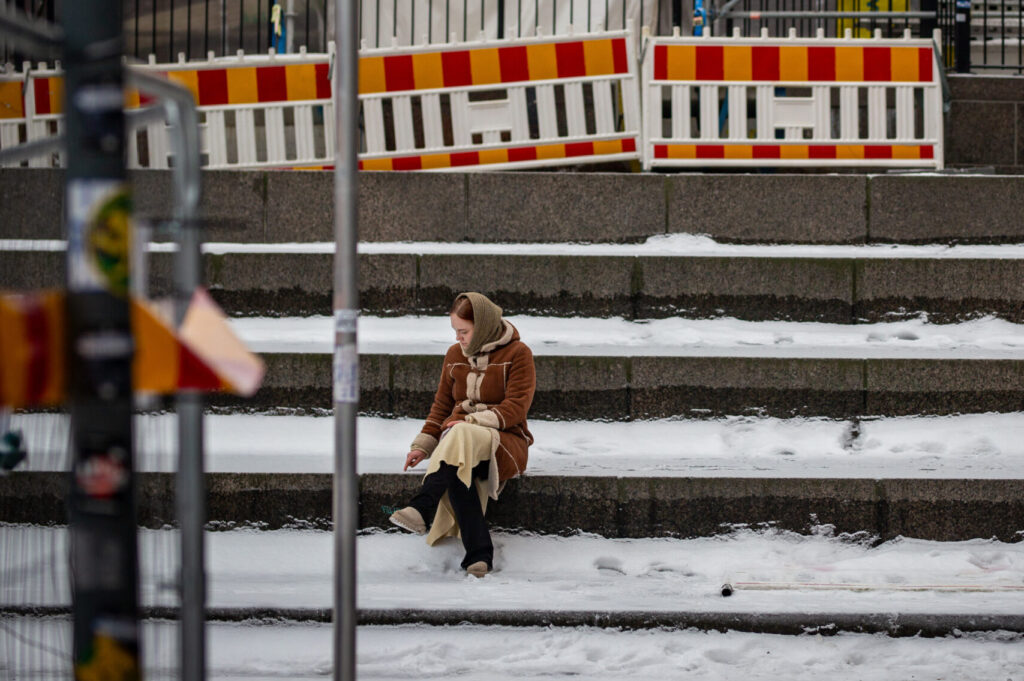
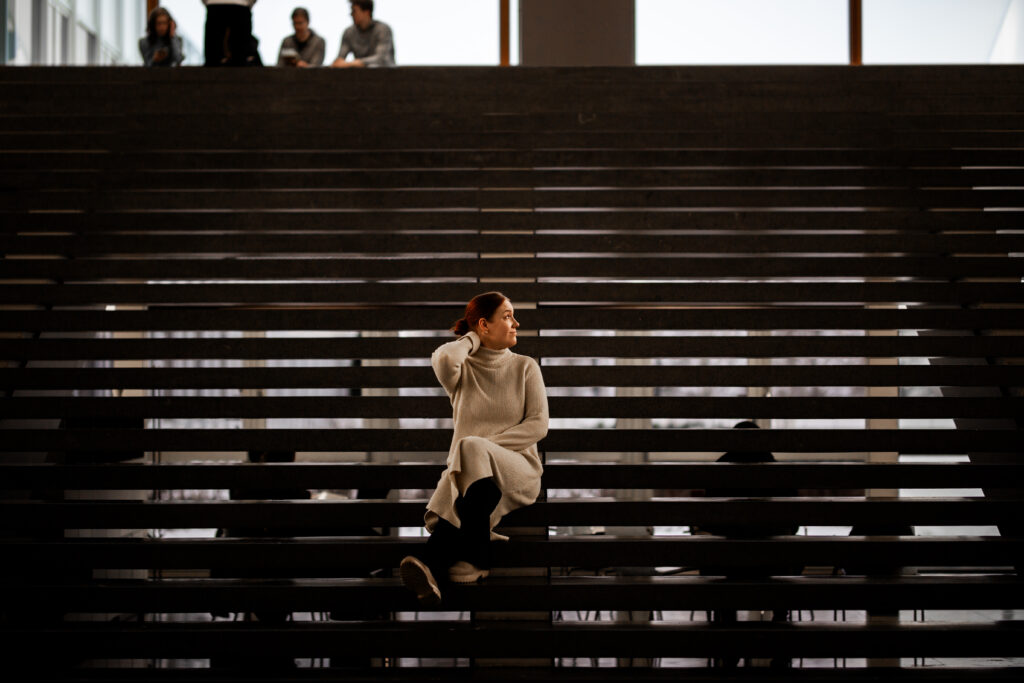
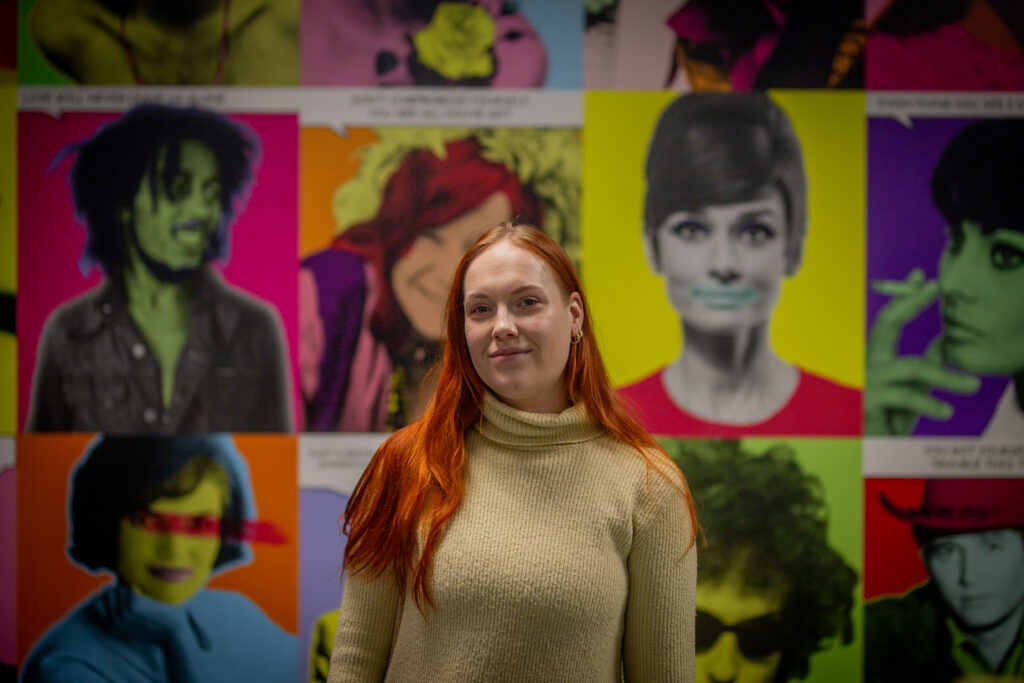
”The university is a very middle-class environment. Coming here was a huge culture shock for me,” says Noora Ikonen, who studies social policy at Tampere University. They are the first secondary school graduate on their mother’s side and the first university student in their entire family.
Ikonen, who grew up in Espoo, started their university studies in 2019 after living in the countryside for a couple of years and having their first child. Now they are writing their thesis on the implementation of Child Welfare Act in institutional care. The topic is personal: Ikonen lived in a children’s home for eight years.
“Very few people with a background in child protection go to university. For me, studying has been an escape, and I was always encouraged to read and pursue education. It has made a critical difference, as I know many people who have been told since childhood that they are worthless,” Ikonen says.
In the liminal space between classes
Class is not just about statistics or differences in education and income—it’s about culture, language, and ways of living. Sociologist Mari Käyhkö, who has studied working-class women who have gone to university, has written in her research article about how an unusual class background in the academic world can create a feeling of “liminality”, or living between two worlds. Students with a working-class background are a minority at university but can also become estranged from their homes due to the new environment.
Noora Ikonen also recognises the phenomenon and says that many friends have fallen off due to the difference in education. Some old acquaintances have, for example, directly noted that Ikonen speaks too academically.
”Once I got into an argument with my father when I talked about segregation. Terminology like that can seem pretentious, but then, at university I have always felt like I’m too much in a different way. Here, instead of straightforwardness, the culture values quietness and politeness. My way of expressing myself has sometimes been interpreted as angry, for example.”
However, Ikonen does not identify with the working class. Rather, their social background has been defined by unemployment, substance abuse, and different subcultures. Their father sat in prison for years. The first time Ikonen recalls noticing class differences was when they were in preschool. Their friends’ homes had unbroken furniture, their own rooms, and matching cutlery. In some families, nothing had to be given up for a trip to Linnanmäki.
Bursting the bubbles
Talking about their background in the university environment has not always been easy for Ikonen. However, any remaining shame disappeared when they found themselves in a situation where they had to speak up.
”I was at an event where a researcher studying social disadvantage spoke about “junkies”. The researcher justified the use of the term by explaining that the research subjects had used the word to describe themselves. I thought then that enough is enough and asked if they realized that they were talking about my family members and friends. Language like that wouldn’t be okay for any of them. In situations like that, talking about my background is necessary to get people out of their bubbles, and to get them to understand their positions and privileges.”
Ikonen explains that people in disadvantaged positions grapple a lot with internalised self-hatred and self-deprecation. Researchers should always be mindful of their language and to make sure they’re not repeating prejudices in their discourse.
“A researcher is in a position of power relative to their research subjects. There should be sensitivity to the kind of shame that can be associated with research situations, especially if one ends up in a conversation with a respected researcher as a drug user or homeless person.”
The hierarchy of social classes is also deeply embedded in our language. Mari Käyhkö, who has studied the working class, has pointed out how everyday language about individuals who ”strive for higher education” and ”climb the ladder” reflects the assumption that the motivation for education is always based on a desire to escape one’s background and achieve the middle-class status.
Dangerous politics
Statistically, higher education not only brings a higher standard of living but also better health and even increased lifespan. In addition, students connect with other educated people and form social circles within the academic world. Helsingin Sanomat published an article in July 2025 writing that in Finland, having children has also become a class issue. Family formation is most common among the highly educated and those in good social positions.
At the same time, however, cuts are being made to education funding and resources. Finland’s development differs from other OECD countries, as is revealed in the Education at a Glance 2025 report. While in other member states education funding generally increased from 2015 to 2022, in Finland it was reduced. The number of young people completely outside the sphere of work and education has also increased, and also in this regard, Finland’s development is more negative than that of the other OECD countries.
Noora Ikonen has a thing or two to say about the current political climate.
“Driving people into hardship and poverty disrupts social tranquillity. Cuts are being made not only to education but also to child protection, social security, and to the preventive work of the third sector. We have a lot of unemployment, more children are being taken into custody, and there’s increasingly stronger drugs on the market. It’s dangerous if people have nothing left to lose.”
Ikonen sees all of this as class-hostile politics. With decisions like these, it is pointless to expect any increase in social mobility, they add.
Fake it till you make it
If the academic world feels unfamiliar, adapting to it may take time. Ikonen stresses the importance of self-compassion. There might be a surprising amount of reflection to do in the beginning of studies if there is a gap between social norms.
”Here at university, you might suddenly notice that you have missed out on things that are normal for others. Dealing with those kinds of things can be painful and take up a lot of energy.”
Through their studies, Ikonen has found friends from various backgrounds. Some have very similar starting points to theirs, while others do not. They point out that for most, the background of others does not matter, and people are not quick to judge.
”If you feel unsure to speak with the academic terms used here, use your own. Things don’t have to be so serious all the time.”
For Ikonen, group work was a great way to build trust and find common ground with others. It was necessary to learn to let go of excessive independence when working in groups.
“I find that you can learn to be “middle class” like you can learn any skill. I find it interesting to build new practices and learn new skills. You know, fake it till you make it”, Ikonen grins.
Ikonen’s personal experiences have also provided valuable professional insight. In social sciences, experiences of class, substance abuse issues, and child protection become theoretically framed, and research can find deeper meaning when the themes discussed are grounded in personal experience.
Background influences choices
In Finland, higher education is organised according to a “dual model”, meaning it is divided into universities of applied sciences and universities. The educational level of the family has been shown to have an effect in whether a student applying for higher education prefers a university or a university of applied sciences. Differences in family backgrounds are evident in educational paths even when the children’s skill levels are equal.
In her doctoral dissertation from December 2024, a senior researcher in sociology Laura Heiskala finds that children who perform well in school are more likely to apply to a university if there is background of higher education in their family. If there is not, the child is more likely to apply to a university of applied sciences. In a sense, universities of applied sciences attract well-performing children from less educated families away from universities. According to Heiskala’s research, being rejected from universities also does not deter those from educated families as much—they tend to apply again more often than those from less educated families.